Showing posts with label Science. Show all posts

Thursday, 2 February 2012

Aurora Australis Time Lapse Captured By Amateur Astronomer Alex Cherney (VIDEO)


After two years of trying to track it down, amateur astronomer Alex Cherney has captured the unadulterated color and beauty of Aurora Australis, also know as the Southern Lights.

On his Vimeo page, Cherney explains that the red color captured in this time lapse "is caused by the charged particles from the sun exciting oxygen atoms high in the Earth's atmosphere."

The incredible scene was captured from Australia's Mornington Peninsula, just outside of Melbourne.
The auroras that occur near the Antarctic circle are called Aurora Australis, as opposed to the Arctic Circle auroras, which are called aurora borealis or the Northern Lights.

A software developer by day, Cherney lives in Melbourne, Australia, and is a member of Mornington Peninsula Astronomical Society, according to his Facebook page.

Cherney also maintains his own website and sells high resolution prints of his photography on RedBubble.
For more footage of the Southern Lights, check out NASA's footage from space.

Friday, 27 January 2012

Kepler Mission Finds 26 Planets In 11 Solar Systems, NASA Says


Planets 
 Call it payday for planet hunters. The Kepler space telescope mission has detected 26 previously unknown planets orbiting their suns in 11 new planetary systems, NASA's Ames Research Center announced on Thursday.

The discoveries nearly double the number of known alien worlds - or "exoplanets," as astronomers call them.

"Prior to the Kepler mission, we knew of perhaps 500 exoplanets across the whole sky," Doug Hudgins, a Kepler program scientist at NASA Headquarters in Washington, D.C., said in a written statement. "Now, in just two years staring at a patch of sky not much bigger than your fist, Kepler has discovered more than 60 planets and more than 2,300 planet candidates."

The findings show that our Milky Way galaxy is "positively loaded with planets of all sizes and orbits," Hudgins said.

And the list is likely to keep growing. The number of exoplanets confirmed by the Kepler mission now stands at 61, with an additional 2,326 planets not yet confirmed, MSBC reported. All told, more than 700 planets have been found outside our solar system.

The newly discovered planets vary in size, with some only about 1.5 times the size of Earth and others bigger than Jupiter, Discovery.com reported. It's unclear whether the planets have rocky surfaces like those in Earth or Mars or if they are gaseous planets, like Neptune.

Because the planets have tight orbits around their stars, none is believed to be conducive to life. But astronomers were out of this world with enthusiasm for the findings. As Dimitar D. Sasselov, a professor of astronomy at Harvard University, told MSNBC, "There is more diversity out there than our limited imaginations could come up with, which is good."
The discoveries are described in four separate papers published in The Astrophysical Journal.
Here's a NASA animation that shows the planets orbiting their stars.

Thursday, 26 January 2012

Amazing Images Of The 2012 Solar Storm From Space (PHOTOS)

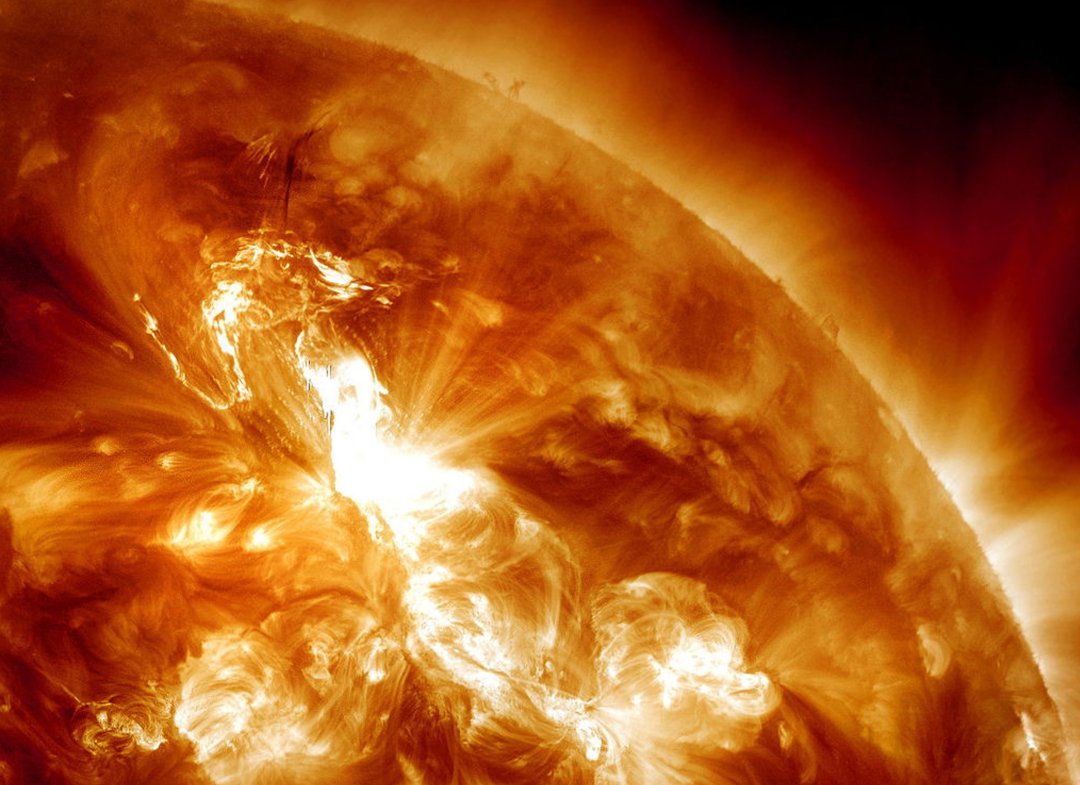
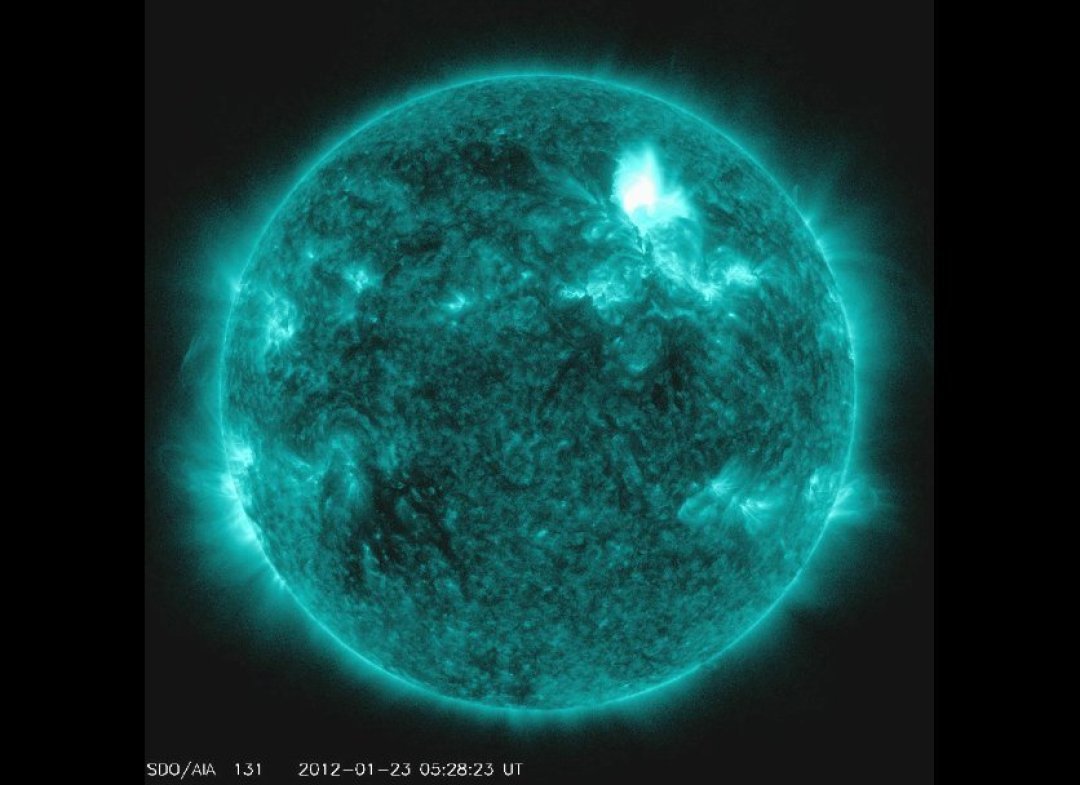
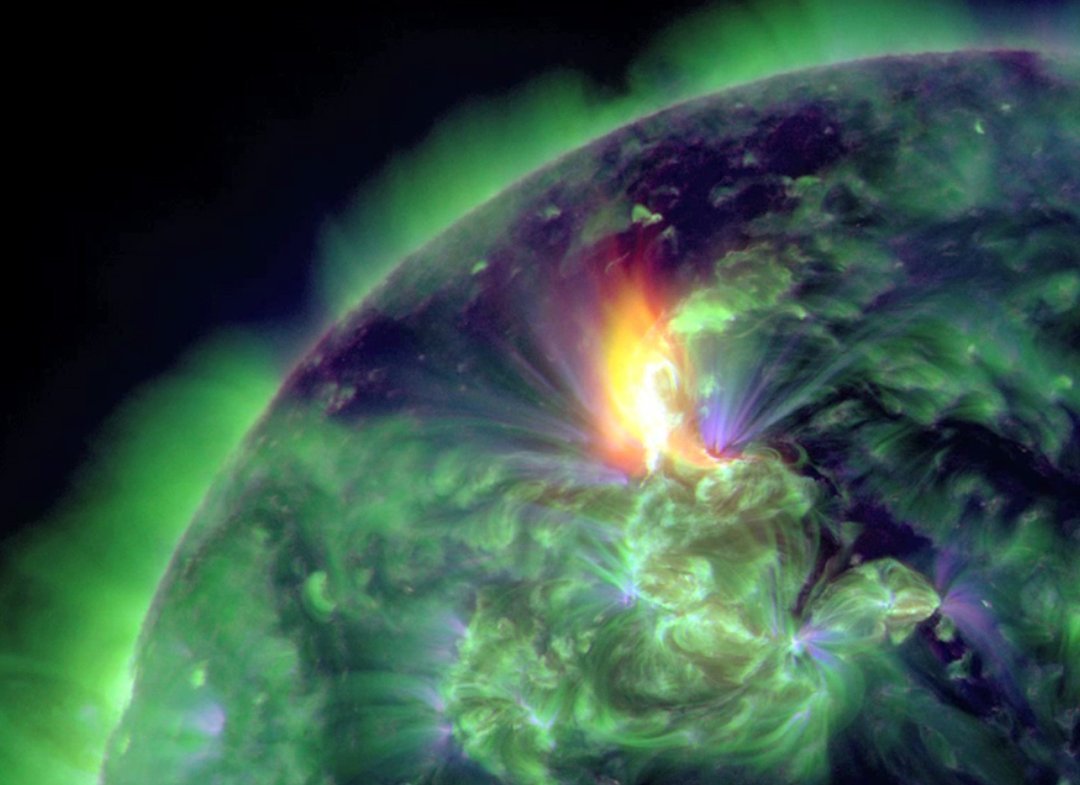
solar storm created a dazzling light show in the northern latitudes of Earth on Tuesday. The storm also bombarded the Earth with radiation in the form of solar protons. The radiation storm is the largest of its kind since 2005 but still ranks only a three on the scale of one to five, enough to be considered "strong" but not "severe"


Wednesday, 25 January 2012

Solar Storm Now Hitting Earth, Called Strongest Since 2005, Could Affect Astronauts

WASHINGTON -- The sun is bombarding Earth with radiation from the biggest solar storm in more than six years with more to come from the fast-moving eruption.

The solar flare occurred at about 11 p.m. EST Sunday and will hit Earth with three different effects at three different times. The biggest issue is radiation, according to the National Oceanic and Atmospheric Administration's Space Weather Prediction Center in Colorado.

The radiation is mostly a concern for satellite disruptions and astronauts in space. It can cause communication problems for polar-traveling airplanes, said space weather center physicist Doug Biesecker.
Radiation from Sunday's flare arrived at Earth an hour later and will likely continue through Wednesday. Levels are considered strong but other storms have been more severe. There are two higher levels of radiation on NOAA's storm scale – severe and extreme – Biesecker said. Still, this storm is the strongest for radiation since May 2005.

The radiation – in the form of protons – came flying out of the sun at 93 million miles per hour.
"The whole volume of space between here and Jupiter is just filled with protons and you just don't get rid of them like that," Biesecker said. That's why the effects will stick around for a couple days.
NASA's flight surgeons and solar experts examined the solar flare's expected effects and decided that the six astronauts on the International Space Station do not have to do anything to protect themselves from the radiation, spokesman Rob Navias said.

A solar eruption is followed by a one-two-three punch, said Antti Pulkkinen, a physicist at NASA's Goddard Space Flight Center in Maryland and Catholic University.
First comes electromagnetic radiation, followed by radiation in the form of protons.
Then, finally the coronal mass ejection – that's the plasma from the sun itself – hits. Usually that travels at about 1 or 2 million miles per hour, but this storm is particularly speedy and is shooting out at 4 million miles per hour, Biesecker said.

It's the plasma that causes much of the noticeable problems on Earth, such as electrical grid outages. In 1989, a solar storm caused a massive blackout in Quebec. It can also pull the northern lights further south.
But this coronal mass ejection seems likely to be only moderate, with a chance for becoming strong, Biesecker said. The worst of the storm is likely to go north of Earth.
And unlike last October, when a freak solar storm caused auroras to be seen as far south as Alabama, the northern lights aren't likely to dip too far south this time, Biesecker said. Parts of New England, upstate New York, northern Michigan, Montana and the Pacific Northwest could see an aurora but not until Tuesday evening, he said.


For the past several years the sun had been quiet, almost too quiet. Part of that was the normal calm part of the sun's 11-year cycle of activity. Last year, scientists started to speculate that the sun was going into an unusually quiet cycle that seems to happen maybe once a century or so.
Now that super-quiet cycle doesn't seem as likely, Biesecker said.

Scientists watching the sun with a new NASA satellite launched in 2010 – during the sun's quiet period – are excited.

"We haven't had anything like this for a number of years," Pulkkinen said. "It's kind of special."