Showing posts with label Lifestyle. Show all posts

Monday, 12 March 2012

I Just Wish He Would Have An Affair!


"My husband is so nice. He's a good guy. I just wish he would have an affair!"

I have heard these comments, or comments very similar to this, numerous times lately. What's going on? I'm not sure I have an answer. In fact, I know I don't have an answer. This isn't about having an answer. This is about laying out some thoughts and observations on this theme that seems so relevant and prevalent.

Several different women have contacted me recently and have shared their stories, and their stress (perhaps distress would be a better word) over the fact that they do not want to be married anymore. Period.

These women are done. They say they aren't happy. They say they aren't in love with their husbands (or any other man -- they aren't having affairs). They say they simply wish they were no longer married to him. They aren't fulfilled. They wonder if this is how they are doomed to live the rest of their lives (and God-willing, most of them have another 40+ years ahead of them).

The common factor amongst all of these women is that they say that their husbands are really solid, good, nice men. They are not victims of physical or emotional abuse. They are not married to felons. They are not married to alcoholics or drug addicts. Their husbands are not having affairs. In fact, they tell me, there really isn't anything "wrong" with their husbands ... they just don't want to be married to them anymore because they have fallen out of love. It's actually a depressing conversation. When did we all become so unfulfilled with life?

And we are talking about women here, so here comes the "guilt." Women have guilt covered -- and these women are no different. They feel guilty as all get out and wonder about what everyone else will think should they decide to leave this "nice" guy. They wonder about the impact it will have on their kids, their extended families, their circle of friends. Deep inside they feel selfish and ask, "What gives me the right to leave my husband when he has done nothing wrong?" And almost immediately after they verbalize that thought, I get this zinger: "I just wish he would have an affair."

Really? You wish your husband would go out and have sex with another woman because then you would be justified in wanting to leave him? If you think about it, there are so many things wrong with that whole series of events. Would you ever imagine when you took your wedding vows that you would one day find yourself hoping your husband would cheat on you? Seriously?

I am not purporting to have the answer on this one. There are certainly some heated viewpoints on both sides of this debate.

One viewpoint is, "Suck it up, you made a vow, you made a commitment, stay married for the sake of the kids, doesn't 'until death do us part' count for anything?"

Another viewpoint is, "You only live once, people change, you shouldn't have to live unhappy and unfulfilled, the kids need to see what a happy, fulfilled marriage/partnership looks like."

And, of course, other opinions abound. What is your opinion? I know you have one and I would love to hear it!

Sunday, 4 March 2012

Happily Ever After?


In the online simulation game The Sims, when an avatar accomplishes all of her lifetime aspirations, she achieves "Permanent Platinum" status, otherwise known as permanent happiness.

 Once "Platinum," her mood bar cannot slip below a certain level, and her environment no longer impacts her happiness. She is frozen in happiness.

Interestingly, when I spoke with players of the game, without exception, all believed Permanent Platinum to be a terrible fate. Permanent happiness left them feeling stuck and disconnected from their alter ego, with nothing left to live for.

 Their reason for taking action, namely, to improve their mood bar, was removed. As a result, everything felt washed out and pointless.

 Most discontinued their permanently happy characters (aka, killed them off) and created new avatars, who could experience discomfort and once again aim to achieve happiness.

Despite this permanent-happiness-related depression, we in the real world maintain a Sims-ilar relationship with happiness.

 We view happiness as first and foremost a state that comes as a result of something we accomplish, attain, achieve or otherwise acquire.

 We add something to ourselves or our lives, and we get happiness as a prize. If we amass enough of the things we want in our life, we will be happy.

On the other hand, if we fall below a certain level of things we want, we will be delivered into the dreaded... unhappiness.

 Consequently, we are constantly searching for that one magic thing that will deliver us into Permanent Platinum status -- the right home, relationship, job, haircut, whatever our personal carrot may be. It will be the thing that guarantees our everlasting happiness.

 And with any luck, after its attainment, we will no longer have to show up for our lives. Like in the Sims game, once we acquire this thing called permanent happiness, we will be free to stop paying attention to the now, and at last will have permission to go to sleep in our life.

Lucky for us real people, there is no such thing as Permanent Platinum stauts. Happiness is not something that arrives in a finished package, and certainly not something that we can hold onto on a permanent basis. In real life, happiness is a temporary state.

 We enjoy it for a while and then we lose it, and then it shows up again and so on, eternally. Happiness comes and goes like every other emotional state.

 In real life, external objects only bring us happiness for a finite period of time at which point, they change or we change.

Change is the only thing that is permanent. If it's Zumba right now that is bringing us happiness, we might twist our ankle or the teacher we love might move away.

 Poof: Happiness is gone. If the object itself does not go away, the feeling that it was offering will change. If it's Magnolia cupcakes bringing us happiness, we might step on the scale after a few weeks of blissful red velvet happiness and poof:

Happiness is gone again. If it's our new boyfriend who makes every step a dance on air, then the day arrives when the pavement appears beneath our feet once again.

 There is nothing wrong with any of this happening, it is in fact the natural evolution of life. Happiness is not a feeling that is sustained; it is not static.

 Happiness, when it comes from an external object (no matter what that object is), is always coming and going.

And yet despite the fact that happiness is consistently inconsistent, permanently impermanent, we judge ourselves as failures when we cannot maintain consistent happiness.

People who are not happy are seen as failures; it is our fault that we cannot hold onto happiness. We are not trying hard enough, not living our life right.

And after all, no one wants to be a around a Debbie Downer, you might catch what she has. Regardless of unceasing evidence to the contrary, we keep demanding and expecting that happiness be something that it isn't -- that life be something that it isn't.

Happiness -- as a goal in life -- is the wrong goal. Rather than chasing happiness, steadfastly defending the belief that somewhere, somehow, if we find the right thing we will indeed be able to hold onto happiness for good, we need to find a new goal for life.

We need to uncover a state of well-being, deeper than happiness, a state that can survive the swings of circumstance, happiness and unhappiness, gaining and losing what we want and the feelings that make up every human life.

Well-being is an internal state, not dependent upon any external circumstances. It is a result of our attitude towards our feelings, not the nature of the feelings themselves and not the circumstances that are causing the feelings.

It is the comfort that we bring ourselves when disappointment is the cloud in our sky, the gratitude that we invoke when joy floats through, the kindness that we offer whatever feelings pass into and out of our inner landscape, regardless of what they may be.

 So too, well-being is an ongoing process, not an object that we obtain. True well-being can only happen in the now, and devolves into an intellectual concept when applied to the past or the future.

There is never a moment when we can assume we simply have it; well-being is sustained by paying attention to the moments of our life, being present and noticing what's here.

The substance of well-being is our own compassionate presence -- a compassion for what we are living now.

The good news is that unlike happiness, the ingredients of well-being are entirely within us -- not reliant upon circumstances that are external, perpetually in flux and too often out of our control.

At last, we can call off the search for something outside ourselves! Perhaps in the game of life, we can discover our own Platinum Well-Being Status, mindful that it is not a button that we press once and forget, but rather, a way of being that requires our attention in all of the nows that we get to live!

Wednesday, 22 February 2012

House of the Day: David Hyde Pierce's Spanish Palace

It's a home that even the obsessively picky Dr. Niles Crane would love.

Which is a shame, because it appears that his off-screen self, the Emmy Award-winning actor David Hyde Pierce, is over it.

AOL Real Estate has learned that Pierce has just listed his exquisite, Spanish Colonial-style mansion in Los Angeles for $7.5 million. Granted, Pierce has owned the house for nine years (a lifetime in the fickle world of Hollywood real estate), but if that house were ours, we'd never want to leave.

With 1920s-Spanish features like a grand rotunda entrance, a stunning baronial fireplace, and a gorgeous spiral staircase rising to a stained glass ceiling, the home is anything but your typical California McMansion.

The home is decked out in warm, earthy tones and each room is beautifully illuminated by chandeliers or other artful fixtures.

Monday, 20 February 2012

Should Schools Teach Teens How To Be Good Spouses?


If we take classes to learn the skills we need to survive in the world at large, as well as the working world, should we take classes to learn how to be a good spouse, too?

About a week ago, Utah Rep. Dixon Pitcher introduced a bill that would require would-be spouses to wait at least three days after obtaining a license before getting married, unless they took premarital training first.

Wyoming introduced a similar bill; couples that didn't attend three hours of marriage counseling would have to wait a year before getting a marriage license.

Other states have tried to pass legislation that would require counseling before couples could divorce.
Clearly there's a movement to get people -- with the help of teachers and counselors -- to think before marrying or divorcing. It sounds like a good idea, but do marriage prep courses work?

Yes and no, according to a 2010 Brigham Young University study, which examined about 50 such classes around the country. Yes, the classes significantly increased couples' communication skills.

 No, the classes didn't improve relationship quality or satisfaction.

As one researcher noted, "Engaged couples are so in love that they can't be more satisfied. Their heads are bumping against the ceiling."

Maybe trying to talk sense into young lovers who are about to walk down the aisle is too late. Perhaps we should start talking about what makes for a healthy marriage in high school; at least that's what the majority of responders in an informal survey Susan Pease Gadoua and I offered as part of our research for our book,
"The New I Do," indicated.

Is there a place for marital education amid algebra, environmental ed and world history classes?
Some high schools already offer that.

 In 1998, Florida became the first state to require a class on relationships and marriage for high school students, part of a larger plan to encourage marriage skills by discounting marriage licenses for couples that take a premarital skills course.

 The mandate hasn't had much impact because "loopholes in the law make it easy to avoid changing the education curriculum," according to the conservative Heritage Foundation.

Loopholes or not, many see a need for such high school classes. In 2000, long-time teacher Marlene Pearson was asked by the National Marriage Project to review the effectiveness of several marriage and relationship programs used in schools. As she says in her study, "Can Kids Get Smart About Marriage," youths are:

Confused and misguided about the differences between sex and love, living together and marriage, manhood and fatherhood. They get little help or accurate information from their elders.
 The Baby Boom generation, veterans of the sexual and divorce revolution, has little to say, and certainly not much good to say, about marriage.

This leaves young people like my students with few clues as to how they achieve a goal they almost universally seek.

They have to try to figure it out by themselves. But the sad truth is that it is hard to figure out marriage on your own.

 Most young adults in most societies across the world are able to depend on the teachings and traditions of the larger community in life matters as consequential as finding a lifelong mate and getting married.

But very little guidance is available in our society today, and what guidance there is comes from Hollywood and Madison Avenue.

As a result, young adults are floundering and often failing in their personal and family lives.

But are high schools -- most of which have had to lay off teachers and staff because of budget cutbacks and are struggling to boost academic scores to keep up with new legislation -- the best place to teach kids about marriage?

As a spokesman for the Florida Education Association noted, "Were schools designed to do this much socialization and values clarification? Many teachers would argue it would be great if they could focus more on academic subjects and worry less about these."

At one point, eight other states besides Florida addressed statewide school-based marriage education. Initiatives failed in Arizona, Utah and New Mexico. South Carolina dropped a program after using it for five years.

South Dakota uses the Connections curriculum, which focuses on marriage and relationship communications skills; a 2004 study of the program found marginal success -- some students felt somewhat more negatively about divorce and somewhat more positively toward premarital counseling.

But because it was an elective class, the students who most needed to learn marital skills didn't benefit because they didn't sign up for the class.

Are teenagers good subjects for learning marital skills anyway? Maybe, especially if you look at them in love.

 Adolescents "are often more focused on how they feel about the relationship and what they are getting out of it rather than a mutual process that includes how the other person feels about the relationship," according to Brenda McDaniel, assistant professor of psychology at Kansas State University, who has been studying
 how 18- to 20-year-old dating couples handle conflict.

But the bigger question is, what marital skills do we teach and what kind of marriage are we talking about? "Traditional" marriage, as the Heritage Foundation stresses?

 What do we teach teens who are gay or lesbian, or kids who are being raised by choice mothers or have two fathers or two mothers? What message will we send teens if schools promote a husband-wife marriage as the only healthy -- or "real" -- relationship?

Should we be teaching teens how to be a good spouse? And, if so, what do we teach and who should do it?

British Fugitive 'Fast' Eddie Maher Lived Inconspicuous Life In US (VIDEO)

KANSAS CITY, Mo. -- On the surface, Edward Maher and his wife appeared to enjoy a comfortable middle-class life. They had homes in quiet neighborhoods, drove late-model cars and took occasional weekend trips. They raised two sons.

But beneath that veneer lay a darker past: Maher was an international fugitive – wanted in Britain on allegations that he stole a fortune worth $1.5 million back in 1993 while working as a security guard for an armored truck company.

When he was captured in rural Missouri, the suspect dubbed "Fast Eddie" by the British media had managed to evade arrest for nearly two decades. Public records and interviews with neighbors suggest he did so mostly by living an inconspicuous life of unremarkable jobs and making frequent, sometimes abrupt cross-country moves.

Maher's adult son, Lee, claims his parents did not tell him anything about their real identities until shortly before his father was arrested Feb. 8
.
"I had just found out that my life is ... not anything that I thought it was," the 23-year-old Maher said in a phone interview.

Growing up, he said, "nothing ever seemed out of the ordinary. It's not something I would even consider because everything was so normal. It really kills me for it to be portrayed this way. I had no idea."

Prior to his arrest, Maher was last seen sitting in an armored truck in Britain, waiting for a fellow security guard to return from a bank with a load of cash. Maher, who was then in his mid-30s, vanished, along with the armored truck.

The vehicle was later found abandoned. Fifty bags of coins and currency were gone.
Authorities offered a reward. Sightings were reported across Europe. But Maher's trail quickly went cold.
At some point, the family fled to the U.S., where Maher often used a brother's name or the alias Stephen King.

No one knows what happened to the money. Spread over nearly two decades, the stolen cash would amount to $75,000 a year – enough for a contented, though not extravagant lifestyle.

To throw off any pursuers, Maher sometimes uprooted the family. At least once, they left in the dark without saying goodbye.

"They literally packed up and moved in the middle of the night," said Betsy Voit, a neighbor when they lived in Grafton, Wis., about 25 miles north of Milwaukee.

Jim Coffey lived across the street from the "Kings" in Laconia, N.H., for several years in the 1990s. He described them as a quiet, seemingly affluent family.

"They were always buying things," Coffey said. "They put in a new pool. They were always doing something around the house."

The man Coffey knew as Stephen King was a "very pleasant fellow" who spoke with a British accent. One day, a truck from the Fast Cash Trading Center in nearby Tilton showed up and took away most of the furniture. King's explanation was that they were buying new furniture.

"Next thing you knew, they were gone," Coffey said. "They were here one day and disappeared the next."
By 2004, the family was living in Philadelphia, where Maher worked for Nielsen Media Research as a field representative and supervisor.

 They then moved to Milwaukee, where he became a field supervisor for the company in 2005 and a regional manager in the St. Paul, Minn., area in 2007. He was laid off from Nielsen in 2008.

His wife, Deborah Ann Brett, who went by Sarah, acknowledged to neighbors that the family had guns. But she didn't want anyone to worry. The weapons were always locked up, Voit said, and the Maher family used to go to a firing range regularly.

Sarah didn't often open up about her background. She said the family had moved from Pennsylvania because of Maher's job, and she showed Voit a photograph of their old house, a home that Voit described as a "mansion."

In Wisconsin, the family lived in a two-story townhome near a large park. Voit said they never flaunted any wealth, but they also spent freely.

They bought four expensive mountain bikes, which they used for several months and then abandoned in Voit's backyard when they moved away.

Sarah, a homemaker, once mentioned to Voit that her family needed a second vehicle. Shortly thereafter, her husband drove up in a decked-out SUV for her.

"The one thing I remember her saying was that they didn't believe in payments," Voit said. They preferred to pay in cash.

Sometime in 2008, the family moved to the small town of Ozark, Mo. And in 2010, the family's finances soured so badly that they filed for bankruptcy.

Maher, now making about $2,000 a month as a cable technician, reported having only $85 in his checking account and a slew of bills from hospitals, dentists and credit card companies. The Internal Revenue Service was after him for $3,148 for back taxes.

Hannah Evans, a former girlfriend of Lee Maher's who says she's pregnant with his child, described the family as traditional. The father was the boss.

"When Mike came home it was about Mike. You had to be quiet, and Sarah devoted all of this attention to him," said Evans, who lives in Springfield. "It was like their family felt very kind of 1950s. ... He's in charge, what he says goes. It's all about pleasing him."

Early in their relationship, Lee told her that he had learned as a teenager that he had actually been born in Britain and that his father had a different identity, Evans said.

Months later, after she told Lee she wanted to break up – in part because of his "constant lying" – he shared the story of "Fast Eddie" and said his father had robbed the armored car. She felt that was Lee's way of explaining his own penchant for lies.

"He said `This is just how I am. I've been trained to lie by my parents because they've lied to me,'" Evans said.

Lee Maher denied knowing anything about his father's earlier life until this month.
Evans said she did an Internet search then for "Fast Eddie" and found only a rapper under that name, so assumed it was "another of Lee's lies."

But soon authorities were in pursuit. Ozark police, working on a tip, contacted the FBI about Maher. They had heard he was a possible fugitive, but there was no active warrant that would justify an arrest. Authorities then determined he was in the U.S. illegally and picked him up on a weapons charge. He acknowledged using a fake name and was jailed.

British police have asked that Maher, now 56, be returned to his home country, but the extradition process could take months.

The day after Maher's arrest, his wife appeared wan but resolute. She declined to discuss the family's past or any criminal allegations. But she said if Maher is sent back to Britain, the family will go there with him.

"He's a wonderful father and a wonderful husband," she said, patting the head of her younger son. "He's never hurt anybody."

Sudekum reported from Kansas City and Ozark, Mo. Associated Press writers Dinesh Ramde in Grafton, Wis.; Lynne Tuohy in Concord, N.H; Steve Karnowski in Woodbury, Minn.; and Jill Lawless in London also contributed to this report.

Thursday, 16 February 2012

My Child's Dream: To Have Friends


Soon after our son Ben was born, a geneticist gave us the news that our baby had a greater than 50 per cent chance of having a rare genetic disorder.

After listening to a vague description of potential bone and development problems, and clinging to the stat that 25 per cent of these kids were intellectually 'normal,' my husband asked, through silent tears:

 "But will he still be able to run and jump and play with his friends?"

At the time, we didn't question that Ben would have friends.

We didn't know that being friendless was the norm for kids with physical and intellectual disabilities.
I really DON'T want to write this post.

I don't want to believe that my son will never be able to develop friends naturally because he can't speak, looks different, can't keep up physically or intellectually with his peers and does things that aren't 'cool' for his age.

But in the last few weeks, the evidence outside our own personal experience has been mounting, and continues to slap me in the face.

It started with a British study -- aptly named Does Every Child Matter? Researchers followed children with disabilities and their families through interviews and observation for 32 months.

 One of the key findings was that parents face huge pressure to 'make their child normal' and when they aren't successful, the child and family are excluded -- from friendships, at school and in the community.

 The biggest barrier to participating in sports or community activities was not access or transportation, but attitudes.

 Children participated in segregated community programs, researchers found, because they had no other choice.

 At school, they were segregated because of the requirement to be 'able' and to develop typically, and because special-ed policies have placed the 'problem' of disability within the child, instead of within the disabling environment, the scientists said.

Then there was the Holland Bloorview research that showed teachers and students alike shut out kids with cerebral palsy in regular classes. "The kids act like I am invisible," one participant said.

And it's not just the children. A teacher turns off a student's communication device, rendering the student silent. Another teacher refuses to allow a child to have a bathroom communication button -- so the child, toilet-trained, must wear diapers.

The reason? The button would disturb other students.

And the final nail in the coffin? In Dr. Anne Snowdon's recent study of 166 families in three Canadian cities, more than half of children with physical and developmental disabilities have no friends or only one friend.

Only 1 per cent spend an hour a day with a friend.
Can you imagine the outcry if any other population of Canadian children was found to be this isolated and alone?

Reporting on Snowdon's study, André Picard writes in The Globe and Mail: "In childhood, efforts are made, but by the time kids hit age 10 or so, when cliques and social circles form outside of parental control, ostracization and isolation is near complete."

According to a U.S. National Institutes of Health funded study in Ontario, the teen years are particularly difficult. While peers become involved in a growing array of activities that widens their social network, teens with disabilities tend to stick with the same activities, often with family members.

Ben wants friends. I used to love watching him stand as a small child at the window, signing, "Friends, where?" as we waited for the birthday party guests to arrive.

When he was younger, he had some authentic friends. In particular, students rose to the occasion at an alternative elementary school he attended that had a philosophy of promoting diversity.

 There was Adaku, a girl who was fascinated with sign language, came for play dates and regularly spent time with Ben. She read his poem about a gorilla at a school function.

There was Eli. One day another student questioned Eli about his friendship with Ben, and Eli responded by saying: "Ben? He's one of my best friends" and put his arm around Ben's shoulders.

But things got trickier as the kids moved into puberty: they were now twice the size of Ben, who has a form of dwarfism, we still hadn't found a reliable way for Ben to communicate, and he couldn't keep up intellectually or socially.

 He had one good year at the Metro School for the Deaf -- a segregated program within a regular elementary school. The kids were fond of him, he occasionally had students over, and he liked the kids who rode his bus.
Friendships didn't materialize at his segregated high school 40 minutes away: all the students were bussed in and lived in different parts of the city. If you invited kids to a party, parents never RSVP'd and often the kids didn't show.

 Ben's school reports indicated that he had no contact with the other students -- which was hard for me to believe, because he is sociable.

I have a meeting at Ben's mainstream school in a week and I want to know whether he's made any progress socially there. He doesn't get phone calls or texts with constant requests to go out like the rest of my children. His weekends are free.

 He still doesn't have a way to clearly communicate with people, which seems to be the basis of all friendship.

 He does have guts. He was the only student in the deaf and hard of hearing program who went to the school's Halloween dance (with his worker Marjorie).

 Apparently some girls asked him to dance. When we did his life plan, I wrote out about a dozen possible dreams for the future, and he immediately scanned through them and pointed to "have friends."

I read the comments posted on media stories about research showing exclusion of children with disabilities. Many have disturbing, although predictable, themes: You can't 'force' a child to be friends with a disabled child;

 Parents should have aborted their kids so they didn't have to experience this misery; Why would a child invest time in a disabled child when he or she could get so much more from a typical child?; Any relationship between a disabled and typical child involves charity on the part of the 'regular' one.

If the parents and brothers and sisters of our children have meaningful relationships with them -- why can't anyone else?

No Ordinary Boy author Jennifer Johannesen and I were discussing this the other day. She pointed out that although workers had authentic relationships with her son Owen, she had to pay them to spend the time with Owen -- time that was necessary to get to know the boy inside.

And perhaps that is the bottom line. It takes more time than any teenager is willing to spend to get to know our kids, who are often locked in bodies that limit self-expression.

I didn't want to write this article. But when I came in today, I read this blog entry by Ben's worker Marjorie: 'It's fine, I don't care.' It's about a Super Bowl party one of her adult clients organized. Most of the friends he invited from college didn't come. "It's fine, I don't care," he said.

Marjorie writes: "I once took a small conference with David Hingsburger, and he said something I will never forget: 'You will always be more important in the life of someone with a disability than they are in yours.'"

I'm assuming Hingsburger was referring to how few friends disabled youth have compared to their peers -- which would mean that any friendship is more valued by them.

But it really bothered me, reading that quote. It suggests that the person with disabilities always has less to bring to the relationship. Which is wrong.

The whole topic of youth with disabilities and social isolation makes my blood boil.

Positive Reinforcement: 9 Things You Shouldn't Say to Your Child

I was trying to do two things at once -- cook (in the kitchen) while deciphering some paperwork (in the next room).

I'd been interrupted a thousand times with requests for snacks, shrieks over spilled paint water, questions about what squirrels like to eat, and arguments over whether clouds could be blue and flowers could be green.

 And did I mention that a ruptured disk in my back was throbbing even worse than my head?
Still, nothing can excuse my behavior that afternoon.

I erupted like Mount Momsuvius: "Enough! Get out! Stop bothering me!" The look on my daughters' faces said it all. The 2-year-old's eyes widened. The 4-year-old furrowed her brow and jabbed her thumb between her lips.

 Immediately I wished I could stuff the hot-lava words back into my mouth. They certainly hadn't come from my heart, or my brain.

We all say the wrong thing sometimes, leaving our kids feeling hurt, angry, or confused. Read on for some of the most common verbal missteps moms and dads make, and kinder, gentler alternatives

Wednesday, 15 February 2012

5 Tell-Tale Signs That Your Co-Workers Are Dating


By Charyn Pfeuffer

That "will they or won't they" tension can be palpable in the workplace.

Although Jim Halpert and Pam Beesley of the hit series, The Office have done their best to bring the co-worker-with-benefits scenario to the mainstream, many companies (and fellow workers) still frown upon interoffice romances.

That doesn't mean co-workers aren't swapping spit in the supply closet when you aren't paying attention. According to career website Vault.com, in its 2011 Office Romance Survey, more than half of respondents fessed up to having a fling with a colleague.

Not all office mating signs are so obvious, but sometimes even the stealthiest of hook-ups slip-up. Here are five tell-tale signs that your co-worker may be making a move on the hottie down the hall.
Sign No. 1: Hyper-Attention
Kayt Sukel, author of Dirty Minds: How Our Brains Influence Love, Sex, and Relationships (Free Press, 2012) says that people who are romantically involved get a little obsessed with their intended, especially initially.

 "Just the sound of that special someone's name can change their focus and behavior, to the point where you can see physical changes in the brain," says Sukel. "If your cubicle mate suddenly has to join in every conversation mentioning that one cute guy, seems very aware of where he is, what he says and what he's doing, and makes a point of bringing him up whenever she can, there's a good chance there is a romance on the horizon."
Sign No. 2: Hanging Out
Sophia Lam, 30, crossed paths with her now-husband, Roger when they both worked as customer service representatives at eBay in Burnaby, British Columbia. Initially, they didn't feel any attraction until they started to hang out in the same circle of co-workers about a year and a half later.

 "We (the group) would go to the same birthday parties, work functions, and dinners," says Lam. "Our co-workers told us we would make a great couple, but we didn't think anything of it until he drove me home one day." The couple decided to come clean with their closest colleagues, who initially made some jokes. But they weren't lovey-dovey in the workplace, so co-workers respected their space and professionalism.


Sign No. 3: Touching
Relationship expert and author, Roland Hines, age 45, has been on both side of the co-worker dating fence as an employer and employee. As an employer, the Angeleno included a non-fraternization clause in his new hire paperwork, but remembers the tell-tale signs of attraction well.

 "Employees would frequently schedule lunch time or breaks together, but the biggest giveaway was flirtatious touching," says Hines. "A woman would place her hand on a man's chest or he would grasp her hand with familiarity -- they tried to make it appear as if there was no connection, but clearly there was."

Sign No. 4: Digital Evidence
Between email, Facebook, texting and Twitter, technology can make flirting in the workplace oh so convenient, but it can also be a fast track for disaster.

 Stephanie Losee and Healine Olen, authors of Office Mate: Your Employee Handbook for Romance on the Job, say that sending sexy texts from your company issued mobile or computer is an easy way to leave a traceable trail of your tryst. Nosy or not, it's not impossible for your cubicle mate to sneak a peek of a love note if you accidentally leave it on your computer screen.

Sign No. 5: Timing Is Everything
Morgan Phillips is a manager at Oddfellow's Cafe in Seattle. With more than two decades of experience in the restaurant industry, he's seen his fair share of workplace sparks fly.

 "You can tell when workers are dating by their timing – they stop talking when people are around, never can be found at the same place at the same time, and show up at work two minutes apart," says Phillips. "In the food and beverage industry, the end of work often marks the beginning of play without a change of venue. Couple that with a few post-shift cocktails and things happen."

What I Know About Love Now That I'm In My 20s


Somewhere along the way, my quarter-centennial crept up on me. 25 is paradoxical -- you know you're still so, so young, that you still have so much to learn, that there is so much ahead. And yet, by this age some people have done insanely impressive things -- founded companies, written books, given birth.

New realizations begin to appear on the periphery of your mind: You no longer want to be at the bar for last call, and sleep is more important than it was at 22. For me, it was also a moment to take inventory of my love life. Combing through about nine years of dating, I've come up with a few things I know to be true. I'm certain over time this list will change or double, but here's what I've got so far:

You know the answers to your questions.
I've read at least five articles over the years advising me to "follow my inner voice." I thought it was a new-agey cliche and never really paid attention. Then I realized that for most of the bad decisions I've made in relationships, I knew at the outset they were wrong.

 I spent hours in diners with best friends debating whether I should end things with a guy, even though I subconsciously already knew the answer. That internal voice is actually there, and it's telling you what you know you need to do, even if you don't want to know.

Warning: It's usually pushing the most difficult option, the one that will give you the most peace in the long run even if it breaks your heart in the meantime.

If anyone is going through anyone's email inbox/phone/Facebook account, you shouldn't be together.
Social media has destroyed the notion that there are some things we don't need to know. In the last decade, it's become possible to find out not just what your boyfriend's prom date looked like but what she did on her recent vacation in Hawaii. If either of you feels the need to snoop, something is very wrong.

I discovered this years ago when my ex looked through all of my Facebook messages while I was in the shower. After that night, I never thought of him the same way; a boundary had been crossed, and there was no going back. Everyone deserves privacy -- the question is whether or not someone deserves your trust.

No matter how progressive you are, manners matter.
For a while l had trouble admitting this, because I grew up believing you can do it all on your own. When I was younger, I used to love the kind of guy parents hate. It took a few good men to show me you can be independent and still appreciate a guy who holds the door for you. Is he polite to your friends? Does he remember you're out of milk? These aren't necessarily deal breakers, but when a guy walks you home or grabs a heavy bag out of your hand, appreciate it. Good manners say a lot about a person.
You chose the friends you have for a reason. Take their advice seriously.
The friends you spend the most time with have probably known you longer than any guy you're dating has. They can recognize when you're happy or not, so if you're coming to them for guidance, pay attention to what they say.

Any man I've been with that my friends have red-flagged has always turned out to be trouble. I suppose it's possible that your friends will initially hate the right guy for you, but I'd say probably not. My guess is they'll never tell you anything you don't already know. Bottom line: If your friends don't like him, it's likely doomed to fail.

Intimacy is communication. Period.
The greatest lesson a man I loved ever taught me was that being intimate means creating a safe space to talk about how you each feel, whether it's your fears, your dreams or your insecurities.

You should never feel like you have to be quiet because you don't want to rock the boat. Those who truly love you will want you to talk, even if you don't think you should.

It's not how he is when things are good; it's how he is when things are bad.
After the dates slowly become just hanging out and you're settling into something serious, you'll surely encounter rough patches in your own lives. It's in those moments that you see what people are really made of.

One night, when a guy I was dating slept over, I had a nasty fall while running to the bathroom, which resulted in a broken toe. When I limped back into the room, he nonchalantly rolled over and went back to sleep. As I iced my foot over my bathtub the rest of the night,

I knew I had to break it off. If that's how he is when my toe is broken, how's he going to be when something really tragic goes down?

You can't change or save anyone, so stop trying.
Sure, people can evolve, but only at their own will, which is a fundamental truth I wish wasn't so. If he's not motivated about his career, you won't be able to motivate him. If he drinks too much, he'll continue to do so no matter how much you hate it.

This is one of the hardest lessons to learn, and something I'm not sure anyone can ever master. Instead, try to remember that you have to want the person you met from day one, because chances are that's exactly what you're getting for the long haul.

Don't feel guilty about breaking up with someone.
Having these sort of conversations are brutal, and we'll go to great lengths to avoid them (including staying in the relationship far longer than we'd like).

 I remember having that feeling at the end of a summer fling when we had to decide if we were going to change our lives to be together or not.

"Are you crazy about me?" he asked, and I was confused. "I think we like each other a lot," he continued, "but we're not crazy about each other and we should find someone we are crazy about." It was tough to hear, but he was right, I wasn't, and it's okay to admit when something isn't working.

We've all been heartbroken, and sometimes we're the heartbreakers, and that's just life. Be graceful, be kind, but always be honest with yourself and the person you don't want to be with anymore.

It's always for the best.
Sadly this only comes in retrospect, but I've never found it to be untrue. I've spent months obsessing over relationships that didn't work out, or how things used to be with ex-boyfriends, but I can confidently say there isn't any former flame I should still be with. Recently, at the Apple store near my apartment,

 I bumped into a guy I dated who took a long time to stop thinking about. After briefly saying hello (and despite how great he still looked), I knew we were both meant to be without each other. Remember; relationships end because they aren't working anymore.

Be okay with yourself.
Look, dating is arduous. Despite some amazing highs and great moments, you'll face times when you don't even want to do it anymore.

The only way to survive the road of romantic triumphs, tragedies, and humbling episodes is to be okay with who you are and know that there is someone who'll love you for exactly as you come. It's important to always strive to be better, but throw away the first-date-facades and be yourself.

It's worth it.
I'd like to note that I've disregarded every lesson on this list, and it'd be wishful thinking to assume I'll never break one of them again. When it comes to something as elusive as love, it's hard to know when you're going about it the right way, or if all the ups and downs will lead to what you're hoping to find.

 No one can be sure it will. But it only seems fair the search wouldn't be an easy one. After all, of all the journeys one would take, could you think of one more worth it than the path that leads to love?

Sunday, 12 February 2012

Charlie and Braden Powell: Family, Teachers Remember Powell Boys At Tacoma Funeral


TACOMA, Wash. -- More than a thousand people mourned the deaths of Charlie and Braden Powell at a public funeral Saturday, nearly a week after the young boys' father killed them and himself in a gas-fueled blaze.

"We want to celebrate their innocence today," said the Rev. Dean Curry, lead pastor of Life Center Church in Tacoma. "We want to be grateful for the moments we had with these children."

The boys' grandfather Chuck Cox thanked police, social workers, teachers and everyone who cared for Charlie, 7, and Braden, 5, as well as people who had prayed for the boys after they died.
It "helps us to know that there are good people in the world – good people who fight against evil," Cox said.

At the front of the church's sanctuary, the boys were in a single casket topped with a large flower arrangement that included daisies, roses and sunflowers.
"We know that they're with their mother," Cox said, remembering his daughter, Susan Powell, who has been missing for two years and is presumed dead.

The boys' father, Josh Powell, was in the middle of a custody battle with Cox when he torched his rental home in Graham last Sunday.

Josh Powell was a person of interest in his wife's disappearance in Utah two years ago, and prosecutors consider the fire an admission that he killed her.

Cox gained custody of the children more than five months ago after police arrested Josh Powell's father, Steve, on voyeurism and child pornography charges.
The kids were arriving for a supervised visit when Josh Powell blocked a social worker from entering the home. He then attacked the boys with a hatchet and torched the house, authorities said.
Pierce County sheriff's spokesman Ed Troyer said Saturday that Josh Powell's body will be released to a cousin Monday.

About 1,200 people attended the boys' funeral at Life Center Church in Tacoma. Many of them wore purple and blue ribbons in memory of Susan, Charlie and Braden.
Two teachers shared their memories and read letters from other instructors who had interacted with the boys.

Charlie was remembered as a boy fascinated with science and insects, often trying to sneak worms or caterpillars into the classroom. He was about to get glasses and loved to write, dreaming up plans to market his books.

"At an early age, Charlie displayed a keen intellect and compassionate heart," said Tammy Ougheon, Charlie's kindergarten teacher in Utah. "He was an amazing young man."

His younger brother, Braden, preferred cars and trains, teachers remembered, and last Halloween got to dress up as a Transformer. Braden, teachers said, loved to be tickled.

"Braden walked through the doors every day with a big smile on his face," said Kristie King, an instructor at a YMCA where Braden was enrolled in a pre-kindergarten program.

King said Braden "had a heart of gold, always wanting to show affection."
"Braden liked to hold his teacher's hand and not let go," she said.

Three projection screens inside the church showed photos of the boys: pictures of them smiling with their mother, laughing with their grandparents and playing outside.

"We are grateful for the opportunity that we've each had to have felt the joy that these two small children have brought into our lives in their short lives," family member Kirk Graves said in the funeral's closing prayer.

People started lining up outside the church more than an hour before the service was set to begin.
Tony Deponte, 39, said he was in "total shock" when he heard of the boys' deaths.

"The first thing I did was stop and pray for these children," said Deponte, of Tacoma. "The whole community 
is feeling their loss."

Amanda Morse, of Seattle, was standing outside the church, holding her 5-month-old son, Ronan. She said she wanted the family to know that they weren't alone.
"It was a tragedy that shouldn't have happened," she said.

A private interment will take place Monday at Woodbine Cemetery in Puyallup.
___

White Meat vs. Dark Meat: How To Cook Each To Perfection

It seems like everyone is divided over white meat vs. dark meat chicken. I grew up in a family where there was a clear divide. My father always ate dark meat, preferring the leg or thigh instead of what he called "the dry tasteless breast." I sort of went for either, but eventually began preferring the white meat as I grew older. Does that sound a little like your family?

It seems most people overwhelmingly choose white meat over dark. No wonder they sell skinless, boneless chicken breast at the supermarket! Most people prefer eating protein that's completely unrecognizable as a once-living creature. Somehow chicken legs just remind us that we're eating something that was once running amok in a farmyard.

White Meat And Dark Meat Of Yesteryear
The prejudice against dark meat chicken began more than 50 years ago. People who raised their own free-range birds didn't care for the legs, because they were tough. The chickens ran around a lot, so they grew big and strong leg muscles that resulted in tough meat. That's why braising was a key cooking procedure for making use of the tough unwanted legs. The preference for white meat put dark meat in the corner. Dark meat got no respect!

White Meat And Dark Meat Today
The chickens of yesteryear are no longer the birds of today -- they've changed. Most of the poultry we eat is raised in gigantic farms that turn out chickens on conveyer belts. The chickens are raised in awfully crowded pens and as a result they barely move. Therefore their chicken legs are a whole lot more tender than their ancestors' legs. However they're also bred to have extraordinarily large breasts -- some of the chickens are so top-heavy they can't even stand up.

But even with tastier more tender legs, people still preferred white meat over dark. Part of this was a little brainwashing. By the 1960s Americans had been convinced by the medical community that white meat was healthier because it was lower in fat and cholesterol. And poultry manufacturers began marketing white meat as better for you, even selling it at higher prices to meet their bottom line. Dark meat was shipped abroad.

The Nature And Science Behind White And Dark Meat
There is an obvious difference between dark and white meat. The dark meat -- the legs -- do more work. They are constantly moving muscles. Dark meat contains the compound myoglobin, which is what gives it a reddish hue. Myoglobin helps transport oxygen to muscles so that they can function. When you cook dark meat, its color changes to brown. White meat has very little myoglobin and thus the meat has a pale pink color. When cooked, the proteins coagulate and the meat becomes whitish.

The Nutrition Behind White and Dark Meat
Nutritionally there isn't that much difference between white meat and dark meat. If you compare 100 grams of boneless, skinless chicken breast to 100 grams of boneless, skinless chicken thigh, there isn't a lot to differentiate the two. The chicken breast has 0.44 grams of saturated fat and 114 calories. The chicken thigh has 1.1 grams of fat and 125 calories. The dark meat chicken is more rich in nutrients and minerals. The white meat is higher in protein at 23 grams compared to 20 grams for dark meat.

The Whole Bird Conundrum
The problem with cooking a whole chicken is that it does have both dark and white meat. When roasting a bird you either end up with overcooked breast and perfectly cooked dark meat, or perfectly cooked breast and underdone dark meat. In a perfect world, you'd be cooking the chicken parts separately or at least taking them out of the oven at different times -- that's exactly what restaurants do to get the perfect roast chicken. One great way of cooking a whole bird is to butterfly or spatchcock it. Basically the chicken is split down the back and cooked flat. This works well for roasting and grilling. The end result is a tender and succulent chicken cooked very evenly.
Recipes:
Roasted Chicken Under a Brick
Grilled Chicken Under a Brick

The Best Ways To Cook White Meat
Fast and hot is the best way to cook chicken breast, since it has very little fat. Think of pan-searing and grilling -- these are the methods that will give you the best results. No one likes a dry, overcooked chicken breast, so cooking it quickly is the key. For pan-searing you'll want to sear each side of the breast, then finish cooking it in the oven, or if the breast is thin you can finish it on the stove-top. With grilling, you'll want to mark each side of the breast and then let the breast cook through over a low flame. Make sure to check that the internal temperature of the bird is 160 degrees to ensure it is done. When cooked properly, the inside of a chicken breast will be tender and moist.
Recipes:
Pan-Roasted Chicken Breasts
Grilled Chicken Breasts

The Best Ways To Cook Dark Meat
Even if today's chickens get much less exercise, their legs are still all muscle and fat. The best cooking methods for legs are ones that render the fat and tenderize the connective tissues. Roasting at high heat and slow-braising are your go-to techniques. Roasting renders a lot of fat and tenderizes the tough legs. With braising, you will want to sear the meat first to render excess fat as well as add flavor to the dish. The long cooking time will help create meltingly tender meat. The crock pot is great for braising chicken legs.

Why I'm Glad I Gave My Ex Custody Of Our Son

When my ex-husband and I decided to divorce, my close relationship with my son exploded almost overnight. "Luca," then six, turned into a piece of property my ex was determined to acquire. My ex did not go after our daughter, and to this day she fortunately has managed to dodge the crossfire.

Unlike most alienating parents, my ex never really wanted full custody. He wanted me to do the care-taking but let him make the decisions. His intrusiveness, combined with my son's combativeness -- he railed against me, my extended family, and my friends -- were exhausting and demoralizing.

A couple years after the divorce, I mused to a therapist my son was seeing for behavior problems that perhaps it would be better for both children if I let their dad raise them. I worried about the long-term effects of high-conflict divorce. Maybe the absence of fighting would be more valuable to my kids than the absence of their mother.

The therapist, who was aware of my ex's alienating behaviors, practically begged me not to give my ex full custody. "If Luca is having these kinds of problems spending 30% of the time with his dad, imagine what it would be like if he was with him all the time."

So I tried conventional wisdom co-parenting tactics in hopes of easing the conflict. Communicating mostly by e-mail. Setting clear boundaries. Directing my kids to speak to their dad if they complained about him instead of getting in the middle. Doing my utmost not to let my frustration over being treated like my children's au pair bleed out onto them.

I didn't realize then that conventional co-parenting strategies are useless in high-conflict divorce.

When he turned thirteen, Luca's non-compliance and explosive rages grew so intense that I felt I had no choice but to send him to live with his dad -- temporarily.

My ex, now remarried and in a position to take on more childcare responsibilities, petitioned for full custody of Luca. I had remarried as well and my husband, who had been through a six-year-long custody battle of his own, urged me to acquiesce. Given my ex's personality, his bottomless pockets, and my son's animosity towards me, my husband felt I was in a lose-lose situation.

So did my attorney. "Just give Luca's dad what he wants," he advised. "Even if you win, you can't force a teenager to see you."

Now, when faced with the imminent possibility of losing custody of my son, I felt I had to fight. Despite Luca's scorn, I knew he needed me. And there was this, the thought that kept ricocheting through my mind:

What kind of mother loses custody of her child?

The minute I shook hands with the custody evaluator, I worried I was toast. "Irv" seemed smarmy and bored and appeared distracted during our interviews. He told my husband and me how much Luca hated us and how much he loved his dad and his stepmother.

My ex is charming and supremely confident. His wife is an accommodating, don't-make-waves kind of person. My husband doesn't stand on ceremony and can be blunt. He told Irv in no uncertain terms that he didn't understand the case, that Luca had been brainwashed by his dad to hate me. Irv and my husband started arguing.

I was definitely toast now.

I consulted with a psychologist I trusted. When she heard Irv was our evaluator, she urged me to pull out of the evaluation. "I'm in a study group with him," she said. "He's lazy, he makes up his mind without interviewing collaterals, and he doesn't understand parental alienation. If his report ends up in front of your judge, it could be damaging."

So I pulled the plug on the evaluation and settled out of court with my ex-husband. I gave him full physical custody of Luca. I retained shared legal custody but in name only; my ex has sole decision-making power over Luca's education, medical, and mental health care.

Although we never went to trial, my ex told people the judge had taken away my custody because I was a mentally ill, unfit mother.

I slogged through my days, unable to sleep or eat. When I passed Luca's favorite haunts, I saw a shadow where he should have been. It was as if he had died, and a part of me had died with him.

In Gestalt therapy, there is something called the Paradoxical Theory of Change. Meaning, when you stop trying to change something, and accept it for what it is, only then can things change.

And change they did. When I gave my ex full custody, the tug-of-war stopped. Luca and his dad no longer had me to blame. They fought bitterly, Luca's behavior worsened, and my ex sent him to wilderness camp.

When I visited him there, Luca told me what he had known all along but never felt safe enough to say. His dad had been lying to him about me for years. He even convinced Luca to sign a document stating he wanted his dad to have full custody and in return promised he wouldn't send Luca away.

"He tricked me, Mom," Luca said, tears streaming down his face. "He was planning all along to send me away. I don't want him to make all the decisions for me. Can't you get custody back?"

I haven't tried, and I don't plan to. Ironically, having me "out of the picture" has enabled Luca to have a more balanced perspective. We are closer now than we have been since before the divorce. And with Luca at a therapeutic boarding school, we are finally getting the family therapy we need to repair our relationship.

Losing custody of my son was the worst thing that ever happened to me. And it was also one of the best.

Sunday, 29 January 2012

Celebrities In Narciso Rodriguez (PHOTOS) by (Jada Wong)

Narciso Rodriguez became a household name when he designed the late Carolyn Bessette's wedding dress. These days he's best known for his seductive cutouts, sleek column gowns and elegant frocks.

It’s no wonder celebrities like Diane Kruger, Rachel Weisz and Claire Danes are consisently seen in his designs on the red carpet. Even First Lady Michelle Obama is a fan; she chose one of the designer's more controversial dresses for election night in 2008. Clearly, the man has a following.

1. Kate Winslet


 2. Sarah Jessica Parker


3. Rachel Weisz


4. Julianna Margulies


5. Jessica Alba


Friday, 27 January 2012

Open Houses of the Week: Jan. 27-29


Topen houseshere's something about that "Open House" sign that acts like a magnet. Whether you're looking for a new place to live, keeping tabs on real estate in your neighborhood, or just angling for a sneak peek at someone else's private domain, the lure of an open door is strong indeed.

From a tastefully renovated mansion in the proper South, to a ridiculously affordable bungalow in the City of Angels, we lay down the welcome mat at some of the most interesting open houses in the nation. So wipe your feet at the door and scroll right on through.


Open Houses for Jan. 27-29


Atlanta


Open house: Sun., Jan. 29
Location: Atlanta
Price: $1.125 million
Property details: Take a stroll through the garden of this sultry Southern estate's 2.5 lush acres. Inside, this six-bedroom, five-bath home features a completely renovated kitchen, a massive master bedroom and spa bath, and a stately two-story family room. The home may have been built in the 1970s, but you won't find any disco kitsch in this gorgeous 7,000-square foot mansion.


Madison, Wis.


Open house: Sun., Jan. 29
Location: Madison, Wis.
Price: $799,900
Property details: If you have this kind of scratch lying around, why waste it on a closet apartment in a crowded, overpriced metro when you can score a massive home in Madison? This four-bedroom, 4,715-square-foot family home sits on an expansive five-acre wooded parcel, perfect for raising a growing family -- or cattle, for all we care (just get that cleared with the city first). The home even includes a barn that can be converted into a quaint bed and breakfast or office space.

Dallas


Open house: Sun., Jan. 29
Location: Dallas, Texas
Price: $1.295 million
Property details: It's not every homeowner's dream to raise children, livestock or crops -- that's where this contemporary (and contemplative) stunner comes in. At nearly 4,000 square feet, this artist's haven includes a secluded master bedroom in a separate wing of the home, a fully-loaded gourmet kitchen, walk-in closets, an easily convertible multipurpose room (for your painter's easel or drum kit), and a second-story balcony for morning yoga. All this in addition to the fact that award-winning architect Susan Appleton built the place.

Naples, Fla.


Open house: Sun., Jan. 29
Location: Naples, Fla.
Price: $1.305 million
Property details: Floor-to-ceiling windows, dramatic 22-foot ceilings, a gourmet kitchen and access to a multimillion dollar members-only clubhouse -- do we have your attention yet? Built in 2004, this five-bedroom Mediterranean-style home gets you full access to lifestyles of the rich and famous -- 3 pools, a hot tub, gym access, dance studios, massages; and that's just at the clubhouse. See the listing for a look inside the home.

Plymouth, Minn.


Open house: Sat., Jan. 28 and Sun., Jan. 29
Location: Plymouth, Minn.
Price: $799,900
Property description: This hearty slice of Americana comes equipped with six bedrooms, 5 baths and nearly 5,000 square feet of rollicking family space. Built in 2011, this brand new home is completely move-in ready, and -- for the supernaturally inclined among us -- totally poltergeist free.


Baltimore


Open House: Sun., Jan. 29
Location: Baltimore
Price: $784,500
Property description: Feast your eyes on this six bedroom, New Traditional-style family home from 1928. Enjoy the best Baltimore has to offer without sacrificing the attractions that nearby Washington, D.C., has to offer. Located on a quiet cul-de-sac in suburban Baltimore, this home has everything an aspiring lawmaker could ask for -- without the hustle and bustle of big city life.

Whitestone, N.Y.


Open house: Sat., Jan. 28
Location: New York, N.Y.
Price: $1,798,000
Property description: If you're keen on living in the big city, nevermind the crowded streets and tiny apartments. Take it from your hardened New Yorker editors -- Queens is the place to be. Located just a short drive from the bright lights of Manhattan, Queens offers a semblance of suburban bliss in the middle of the concrete jungle. Take this brand-new brick home, for instance. Steep as the price may seem to out-of-towners, just try to find a comparable four-bedroom home in Manhattan for less. We dare you.


Los Angeles


Open house: Sun., Jan. 29
Location: Los Angeles
Price: $99,000
Property description: Speaking of deals in the big city, this bohemian bungalow in Los Angeles is riotously cheaper than anything you're likely to stumble upon in the near future. Curbed tells us that the house was recently flipped, and the outrageous price is a way to drum up interest in the listing. And not only is the home going to be on display this Sunday, the listing agent has even said that a "taco dude" will be on hand, to dispense some West Coast hospitality to interested looky-loos. Can't go wrong there. And if you think we're joking about how cheap this property is, peek at comparable Los Angeles properties below.

Thursday, 26 January 2012

Advice From Bob Arno, National Geographic's 'Pickpocket King'


 Travel safety has been an issue for pretty much as long as humans have existed, and the more globalized and tech-enabled people become, the more nuanced the spectrum of risk becomes.
There are classics like the pickpockets of Naples, newfangled criminals like the ones who skim debit card numbers at ATMs, and dangers we hope are only mythical, like the kidney thief hoax that's been reported everywhere from New Orleans to India. No wonder people have a hard time identifying the line between "paranoid" and "good common sense." To help, criminologist and National Geographic "Pickpocket King" Bob Arno gives advice on how to safeguard your wallet, camera, cash card and your good self while traveling in 2012.


Among women who carry a purse or handbag, which ones are safest? How do you position the strap? What's the worst mistake you see in how they hold and look after the bag?

Bob Arno: The worst, and the most common mistake, is to hang your handbag on back of the chair, or to tuck the bag behind you on the seat. You think you have physical contact with the bag, but fifteen minutes into the meal you forget! I've seen surveillance videos in which a gang of three thieves in a well-established luxury hotel restaurant position themselves strategically around a targeted breakfast table, talking to each other on their cell phones. They wait for the perfect moment when the owner of the bag -- the victim -- leans forward. At that moment, the controller of the gang gives a small hand signal to the other two to execute their independent moves so that everything is coordinated. One accomplice creates a small diversion in front of the table, and the other observes the restaurant staff, to be sure nobody pays attention to the incident. The thief unrolls a soft jacket from his fanny-pack and drapes it over his arm, allowing the fabric to come down over the victim's handbag. He scoops up the bag under the cover of the nylon jacket. They then immediately leave the restaurant. Coffee shops (such as Starbucks and their competitors) are extremely popular venues for thieves who practice bag stealing.
Conclusion: You must have your purse in front of you and keep physical contact when traveling. If it is a purse with long strap, wear it in front of your body when you are in a vulnerable location or environment.


What's the safest place for a man to carry his wallet?

Men should carry their wallets in their tightest pocket. Still, that's not always safe enough. For added security, men might try one of four kinds of under-clothes pouches which are comfortable and functional for easy access, but which make it almost impossible for thieves to steal from.

1. A pouch that hangs from a string around your neck and is worn under your shirt.
2. A pouch that hangs from your belt by a loop and is worn inside your pants.
3. Ankle-holsters in various designs and levels of sophistication.
4. Underclothing with built-in pockets for valuables. One new product is called Stashitware. Another line is made by Clever Travel Companion.


What's the best way to respond to aggressive panhandlers, who may or may not be pickpockets?

BA: We're programmed to be polite to strangers who approach us, even in unfamiliar cities. It's hard to be cynical or always suspicious. But it's wise to question the motivation behind an encounter, regardless of how friendly the stranger appears to be. Scammers want to lull you into a false sense of security and then spring the "rope-in" move. I like to prescribe a dose of cynicism, though it's not to everyone's taste. In any case, aggression should not be rewarded with a handout. Step aside. Disengage.


Further to that, do gypsies actually exist? Where are they a threat?

BA: In terms of stealing and pickpocketing, they do represent a threat. But they are not always attempting to pickpocket when they simply beg. Young female pickpockets in Europe, age 13-18, often originate from East Europe and belong indirectly to gangs, controlled by organized crime bosses. These bosses travel across East European cities and "lease" young girls from their parents with promises of lofty employment in the service sector in Western Europe. They are then "processed" or tutored in various techniques of pickpocketing. Finally, after the "schooling" they are sent to cities like Paris or London, where they're chaperoned daily by their controllers at lucrative "theft" locations, such as busy public transportation stations, maybe underground Metros or popular music festivals. These criminals are not violent and are more a nuisance than a serious threat, yet one has to have one's guard up against them. They're especially prevalent in the big cities of Western Europe and the United Kingdom.


What should one watch out for in a crowded market or bazaar?

BA: It's always hard for law enforcement to patrol and observe everything that goes on in a big market. And the thieves are good at spotting undercover police officers. The good thing is that the merchants in popular markets and bazaars have their own security who alert shop owners about lurking pickpockets.

There are many exotic and bustling markets, for example the Grand Bazaar in Istanbul, which appear threatening, but which are in fact extremely safe. Perception can be wrong in either direction. Without listing every exciting bazaar around the world and ranking its safety, lets just say that common sense should rule. Don't carry more cash than you are prepared to lose. Use those under-clothes pouches. Keep your purse or backpack in front of you (or leave it in the hotel). Markets, generally speaking, accept cash but not always credit cards, although even that is changing now with the abundance of new small portable wireless terminals.


What's the best way to look after cameras, iPhones and other devices popular with petty thieves?

BA: A smart phone can easily be grabbed off your outdoor café table, with the culprit running (faster than you). I have never met a pickpocket who isn't using a cell phone he or she previously stole from someone. Have a wide sturdy strap on your camera which is not easy to yank loose. Be sure it has strong clips at the end of the strap. For extreme situations, buy a camera case that actually has an opening in the bottom where the lens points down towards the opening. In other words, wear your equipment in disguised bags which do not have brand name logos on them, but rather something that will throw the thief off his target scent.

Important: Never fight a mugger! Cameras can be replaced, but getting a sharp object shoved into your body is not a good exchange. You cannot predict the behavior of a mugger. Pickpockets on the other hand are not prone to violence.


Please discuss hazards of public transportation.

BA: Public transport is by far the most common locale for pickpocketing. Especially during the moment you enter the tram/car/bus -- or depart (at the door). The busier the Metro or the bus is, the higher the risk. Real professional teams travel in groups of three and create their own choke-points or blocking scenarios. Understanding that a large percentage of pickpocket thefts happen on or at public transportation should be enough to cause you to plan carefully and be on guard if the train or tram is crowded. It's the physical jostling which needs to be avoided. But it's also extremely easy to avoid the threat with a few obvious counter-moves. Just clasp your handbag solidly in front of you when entering; men can hold onto their wallets.
 

What are the biggest risks in using an ATM in an unfamiliar location?

BA: There are two threats tied to ATMs. One is the "skimmer," a small device overlaying the mouth of the ATM (where you push in the bank or credit card). Skimmers can usually be spotted if one looks carefully at the ATM. If you recognize such a device, walk away and alert proper security personnel. Some skimmers are internal, and can't be seen at all.

Two, and more ingenious, are "shoulder surfers." They lurk near the ATMs and watch the PIN code used at the machine. When they get a PIN code, they watch where the credit card is put, then follow that person around, waiting for a good moment to steal the credit card.

Always shield your PIN as you enter it. Watch for lurkers, and use a different ATM if you're suspicious of bystanders or the machine itself. If your card is "eaten" by the machine, try to cancel out of the transaction, even if you have to abandon your card. Do not accept help from a stranger in this situation.

5 Accessory Trends For 2012

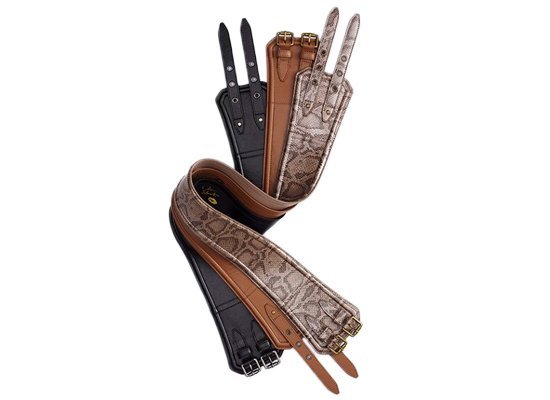
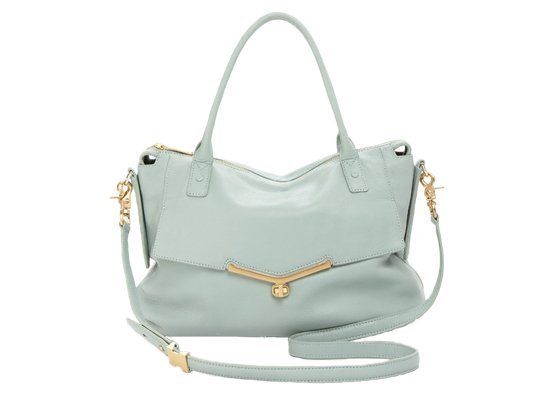
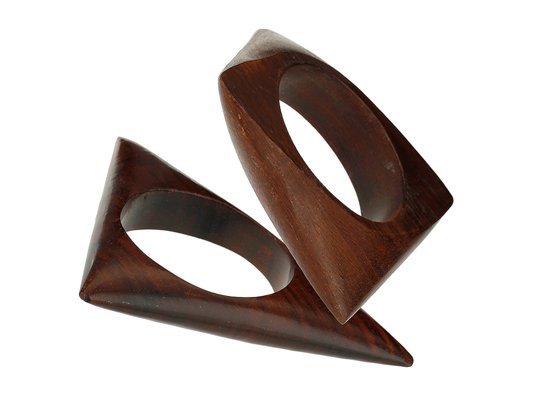
We're less than one month into 2012 and Team Zoe is happy to report that many exciting trends are already emerging on the accessories front. Certain to be a promising time for experimenting with awesome add-ons, we have curated a list of our fave cutting-edge accessory styles.

Whether you opt for big and bold with futuristic details and metallic color palettes, or soft and subdued with pastel hues, you're bound to find a trend that resonates with your aesthetic. From sunnies to bangles to corset belts, we've got the latest and greatest in accessories covered -- all there's left to do is pile them on!

The Corset Belt Trend


The Statement-Sunnies Trend


The Futuristic/Metallic Trend


The Pastel Trend


The Over-Sized Bangle Trend


Wednesday, 25 January 2012

Sundance 2012's Worst Dressed: Paris Hilton, Annalynne McCord And More

The 2012 Sundance Film Festival is in full swing, and we've been admiring our favorite leading ladies' looks at various premieres and parties.

However, we've also seen our fair share of fashion faux pas: ruching gone awry, hideous hats, excessive fur and overexposed decolletage (we're talking to you, Annalynne McCord). And we're definitely not giving a standing ovation to Paris Hilton's suspender-tights-and-fingerless-gloves getup.
Here are our least favorite festival looks thus far.


Paris Hilton, T-Mobile event


Griselda Siciliani, "The Last Elvis" premiere


AnnaLynne McCord, Creative Coalition dinner


Phoebe Price, T-Mobile event


Veronika Dash, "For A Good Time, Call..." premiere 


Stephanie Quayle, ESPN Lounge 


Vanessa Branch, Kari Feinstein's Style Lounge 


Paris Hilton, ESPN Lounge


Judi Beecher, Stella Artois Lounge


Cassandra Hepburn, SAG Indie Actors Only Brunch